
Oh yeah, blogging is still very much a thing in 2026. I reach 1 million+ people every month across my sites, thanks in part to blogging. But the big challenge is that driving high quality traffic with blog content… still takes real work. That’s where the right blog automation tools come into play.
Building a successful content marketing strategy requires smart ideas, outlines, drafts, SEO & AEO-optimization, publishing, and promotion after each article goes live. That’s a lot of operations and coordination work… and exactly why I’m using blog automation tools that save me time (without my sites sounding like robot content farms).
When I say blog automation, I mean content automation software that handles repetitive tasks for me. Automation tools help with research, drafting, optimization, scheduling, publishing, and workflow handoffs. My discernment still matters most in this process. If you want a full breakdown of my process, peep my AI blogging guide.
This list of blog automation tools is structured to help you find the tool that’s best for your use case, so we’re comparing tools for different budgets and goals. Let’s dive in.
Quick Rankings: 8 Best Blog Automation Tools in 2026
- RightBlogger: Best for all-in-one blog planning, writing, SEO, repurposing & automated publishing with multi-site capability
- Outrank: Best for SEO-led publishing and backlink support when search traffic is the top priority
- Arvow: Best for multi-site and multilingual autopilot workflows, especially for agencies
- SEOWriting AI: Best for budget-friendly SEO content generation with a capable AI writing assistant
- ContentBot: Best for solo bloggers and small teams that want to automate bulk blog content
- Jasper: Best for marketing teams that want a wide range of AI marketing tools with lighter automation
- Zapier: Best for connecting apps and automating the steps around your content workflow
- Make: Best for advanced workflow automation when you need more control than a writing app can offer
Those are the quick rankings, now let’s dive in and explore each blog automation tool with some more depth.
My Picks for the Best Blog Automation Tools (to Get SEO & AEO Traffic)
In my comparison guide, I chose to rank these tools based on a few key factors we’ll highlight:
- Ease of use
- Writing quality
- SEO & AEO-optimization capabilities
- Publishing & scheduling automation options
- Workflow depth
- Scalability for multiple sites (great for marketing agencies)
- Budget and price
These factors all matter, because the best choice for you depends on what you’re hoping to accomplish with your blog automation tool.
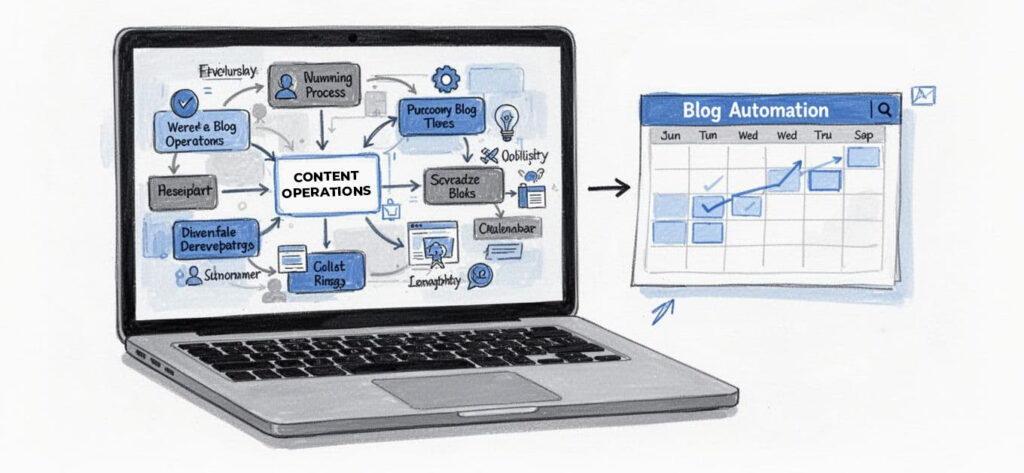
Some people want an all-in-one blog automation system they can set-and-forget. Others want near-autopilot publishing. A lot of teams just need better workflow automation around the content they’re already producing. Those are all very different jobs, so don’t treat these tools like they’re all competing on the same playing field.
1. RightBlogger: Blog Automation with SEO & AEO Optimization
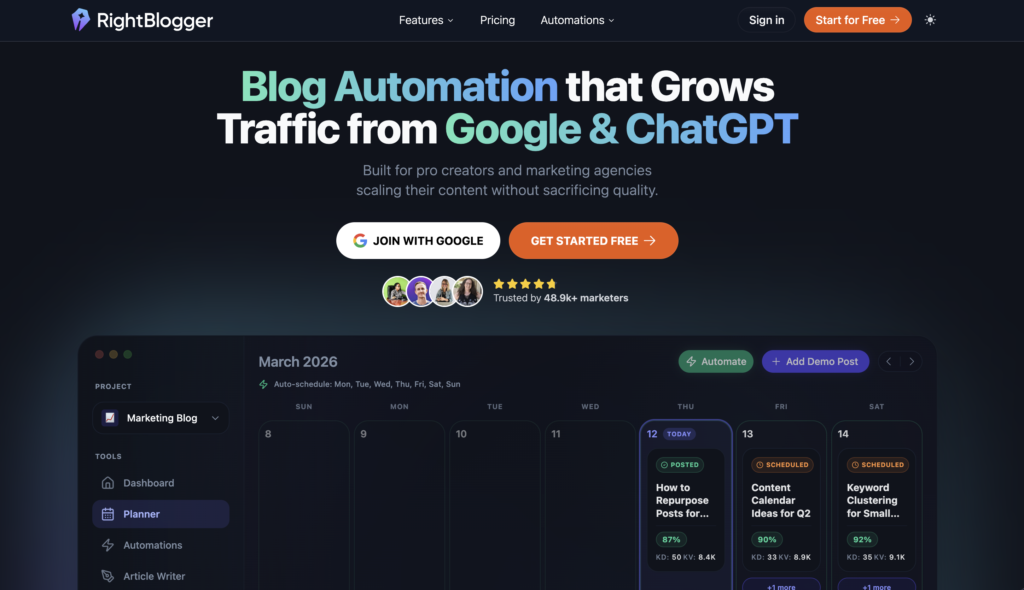
RightBlogger gives the best mix of speed and control with an all-in-one scalable blog automation system that operates around the visual content calendar where you can set up daily automations or add posts one-at-a-time. Plus, you can activate blog automations on the free plan.
It handles long-form articles, SEO & AEO-optimization, bulk content scheduling, and includes high quality image generation in your articles. It also comes packed with keyword research, the ability to edit existing content, repurpose YouTube videos & podcasts into blog posts, extensive voice tuning with MyTone for matching your brand voice, and auto-publishing to platforms like WordPress, Webflow, Ghost, Wix, Shopify, and Duda.
My roundup of the best AI blogging tools for 2026 expands further on where RightBlogger sites in my AI-first blogging stack. It’s my choice for an all-in-one content automation system, especially for a WordPress site.
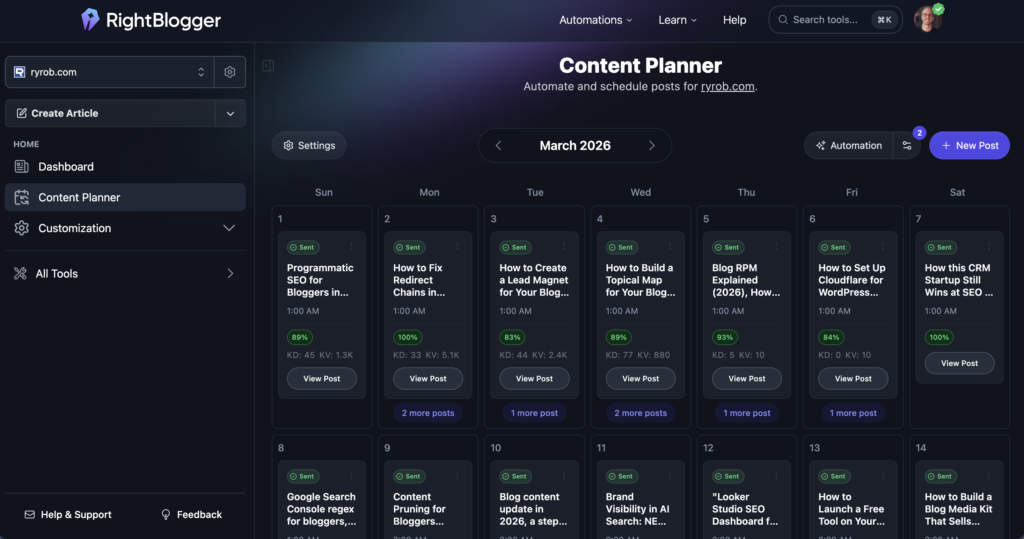
Pros: Strong blog automation features that scale up for use across multiple sites, unlimited word use plans, effective SEO-optimization, built-in image generation, full keyword research and planning, scheduling automations, repurposing tools, and broad CMS support. The free plan comes with an automation.
Cons: If you only need one narrow marketing task, this system can feel like more platform than you actually need.
Pricing: RightBlogger has a free plan (with limits). Paid plans start at $9.99/mo and go up to $69.99/mo for more agency-focused features.
For marketing agencies, content creators, and teams that want one home base for all things blog automations, RightBlogger is the best overall choice. For more context, peep RightBlogger’s own guide to autoblogging tools that paints a clear picture of where this category is heading.
2. Outrank: SEO Articles & Backlink Building
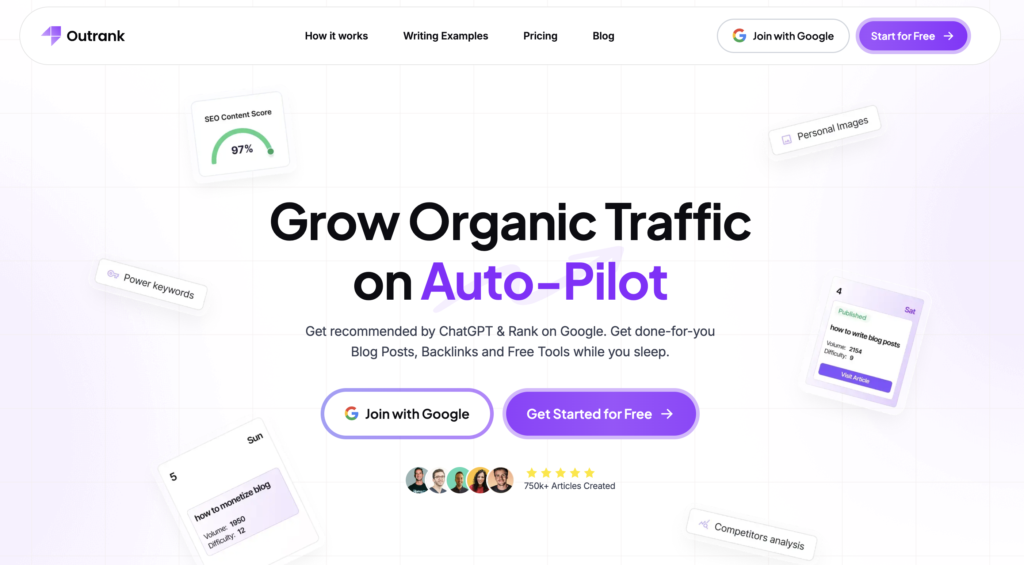
Outrank looks strong when your goal is quickly getting SEO traffic with a high volume of publishing, and you’re willing to be a little more aggressive in your SEO strategy.
This tool is built around keyword automation, generating content briefs, long-form blog drafting, auto-publishing, SEO-optimization, internal linking, and backlink support to drive organic traffic. This combo is especially attractive if you’re running an affiliate site or a niche content engine that needs a high volume of content in a short period of time.
Pros: Strong SEO focus, autopilot content workflows, and backlink help all in one package.
Cons: Many online reviews report content quality as inconsistent and questionable, while the backlinks customers report getting are also often cited as low quality. The price of Outrank is also a bit higher than comparable blog automation tools.
Pricing: $99/mo
Ultimately, Outrank is a good choice for people who run affiliate sites or need to quickly spin up a complete niche site with a high volume of good-enough content in a short period of time. For more to compare, check out this list of the best Outrank alternatives on the market today.
3. Arvow: Full Autopilot Content for Multiple Sites
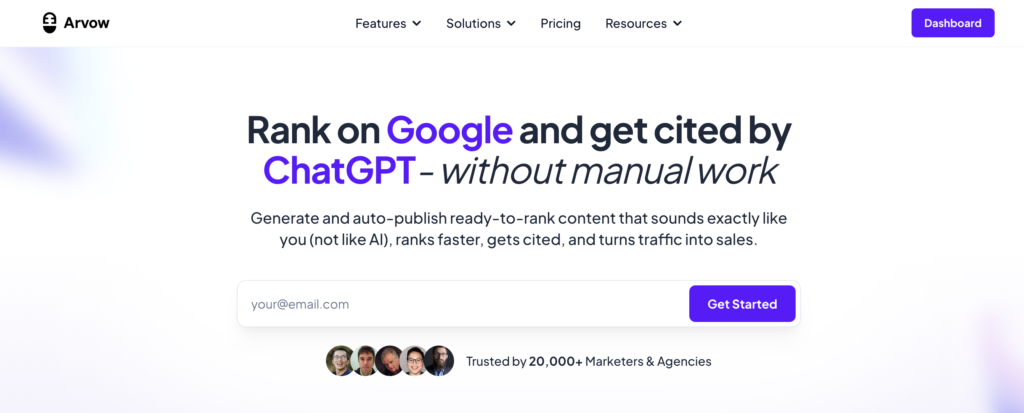
Arvow is the tool I’d look at for hands-off publishing across several sites at a time, and it stands out as a top contender amongst leading autoblogging tools.
It supports different automation modes, including content that can be pulled from sources like RSS and YouTube, multilingual publishing, SEO add-ons, and agency-style reporting that you can share with your clients.
Pros: Strong feature set for what marketing agencies usually want (scale, multiple content sources, and easy client reporting). Arvow also offers a human + AI SEO service (for $2,000/mo).
Cons: Lack of strong customer support and unwillingness to refund unhappy customers is commonly reported about Arvow on popular review sites like Trustpilot and G2. Their credits-based pricing can also get a little confusing for scaled up use of their platform.
Pricing: Outrank plans start at $39/mo and go up to $2,000/mo
While online reviews are shaky about Arvow, they’ve carved out a clear niche as a blog automation system for multi-site operators, publishers, and agencies that want more autopilot than hand-holding in their workflow.
4. SEOWriting: Budget-Friendly SEO Blog Automations

SEOWriting is the budget-friendly blog automation tool of this pack. It offers one-click article generation, WordPress publishing, image generation, SERP analysis, and support for more than just blog posts. That makes it a solid pick when you want search-focused content fast without paying premium-tool prices.
However, it lacks a lot when it comes to setting up true blog automations. There’s no content schedule or visual calendar interface, so it’s a little less intuitive to use, and not as scalable across multiple sites or for agency clients.
Pros: Speed, SEO focus, and affordability are the biggest wins here (especially the budget-friendly aspect).
Cons: The cons are predictable for a low-cost AI writing tool, the quality is widely reported to be quite low across various content formats, so you’ll need to factor in time or tools to help with editing before you publish content from this tool.
Pricing: SEOWriting plans start at $14/mo and go up to $230/mo for the full feature set
While SEOWriting loses ground when it comes to the quality of writing and on their disconnected automation workflows, they’re one of the most budget-friendly options available in the blog automation tool space.
5. ContentBot: AI Content Workflows & Bulk Blog Automation
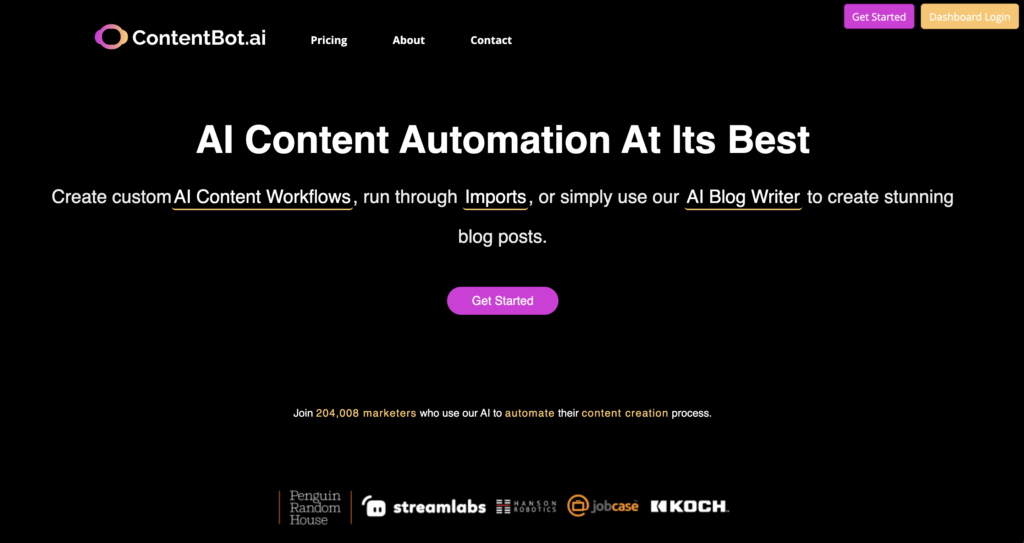
ContentBot is built around a visual workflow system called Flows, where you chain together content creation steps to run on a schedule.
Their lightweight automation system is purpose-built for content marketing automation, which I really like. It also handles long-form AI blog writing, bulk content production via their CSV Import feature (upload hundreds of topics and let it run), it generates landing page copy, ad copy, product descriptions, and has an AI Humanizer to reduce detection flags. ContentBot has a WordPress plugin and a Chrome extension for publishers who want to stay in their existing tools.
The Flows system is particularly useful for solo bloggers or small teams who want to automate recurring content like weekly blog posts or scheduled social updates, without bolting on separate tools like Zapier or Make.
Pros: The combination of built-in workflow automation, bulk content Imports, multilingual support (110+ languages), and a WordPress plugin gives ContentBot more range than most budget AI writing tools. The pay-as-you-go prepaid option is also a nice touch for light users.
Cons: Content quality is widely reported as inconsistent, so plan to edit before publishing. There’s also no visual content calendar, and the Flows builder lacks the branching logic you’d get from a proper blog automation tool.
Pricing: ContentBot has a pay-as-you-go prepaid option (no monthly commitment) and monthly plans starting at $9/mo up to $49/mo for the full agency-focused feature set.
ContentBot is a pretty good choice for bloggers and content marketers who want workflow automation and bulk content production baked into one affordable tool, without paying for a separate automation platform. Just factor in editing time before anything goes live.
6. Jasper: AI Content Platform for Marketing Teams
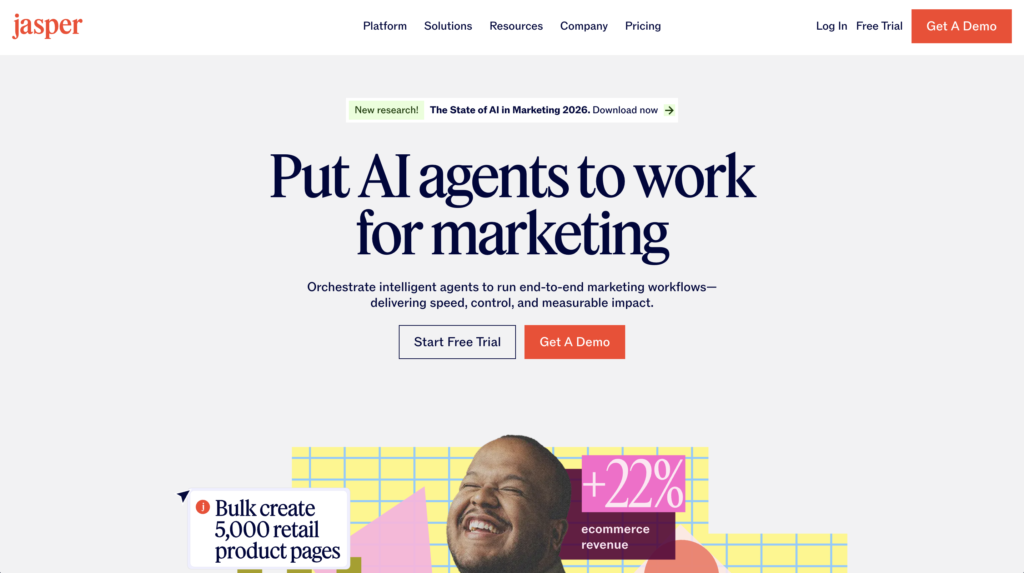
Jasper is the most established tool on this list, and it’s evolved far beyond a simple AI writing tool. However, it’s not a true blog automation system… they’ve pivoted to position themselves as more of a full AI-powered marketing execution platform for establish brands.
Today, Jasper is more focused on serving Fortune 500 companies & enterprise size marketing teams. Their product suite is now centered around AI agents, Content Pipelines (automated end-to-end workflows from brief to published asset), and a brand context layer called Jasper IQ that stores your brand voice, messaging guidelines, and audience profiles, so outputs stay on-brand across your entire team.
For content creators and smaller teams, Jasper is honestly more tool than you need. If you manage high content volumes across multiple campaigns or channels, the depth of its workflow automation, brand controls, and collaboration features start to make a strong use case. Jasper handles a lot of marketing tasks all in one place.
Pros: Jasper IQ’s brand voice and knowledge layer is one of the better implementations of brand consistency in any AI content tool I’ve used, and the Content Pipelines system gives marketing teams a decent automation workflow, rather than just a writing assistant with a publish button bolted on.
Cons: It’s expensive compared to every other blog automation tool on this list and not exactly purpose built for this task. Reviewers also consistently note that outputs still require heavy editing to be publish-ready, which is a tough pill to swallow at $69/mo per seat. It’s also clearly built for marketing teams, not as much for agencies or content creators.
Pricing: Jasper’s Pro plan starts at $69/mo (or $59/mo billed annually) and a custom-priced Business plan for larger teams. A 7-day free trial is available.
Jasper is the right call for larger marketing teams that need a scalable, brand-controlled content system with some workflow automation built-in. It’s not as great of a fit for content creators, agencies, or smaller marketing teams looking for a dedicated blog automation platform.
7. Zapier: Customizable Blog Automation Workflows
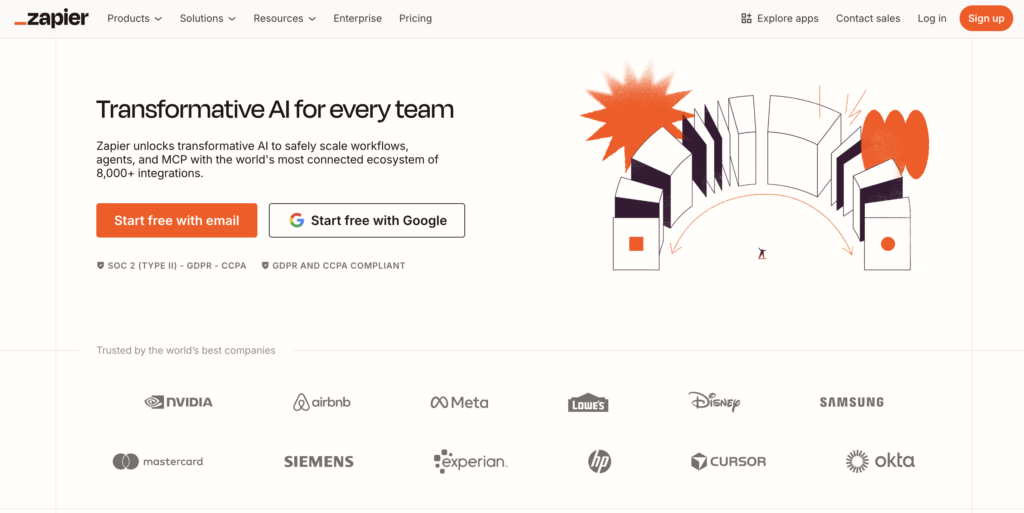
Zapier is pretty different from the purpose-built blog automation tools we’ve covered so far.
It’s not my first choice for writing full articles, because that’s not really what Zapier is built for. Zapier is designed for when you want your different apps to talk to each other without babysitting them for workflow automation tasks.
You can use Zapier to automate tasks like sending form ideas into Google Sheets, creating draft tasks in a project management tool like Notion, notifying your team in Slack, pushing updates into your CMS, and triggering email or social promotion after publishing. That’s why I still recommend it in the mix here.
Pros: Flexibility and ease are the top reasons to use Zapier, plus you can use it in many different ways across your business.
Cons: The downside is that task counts can get expensive as your volume of use grows. It’s also not the most intuitive setup process to get something even close to a full blog automation system in place, compared to the purpose-built tools like RightBlogger, Outrank, and Arvow.
Pricing: Zapier’s free plan is enough to test simple workflows and paid plans start at $19.99/mo for more task runs.
To their credit, Zapier is clear in their own documentation that workflow automation and AI writing are related, but not the same thing.
8. Make: Flexible Blog Automation Workflows
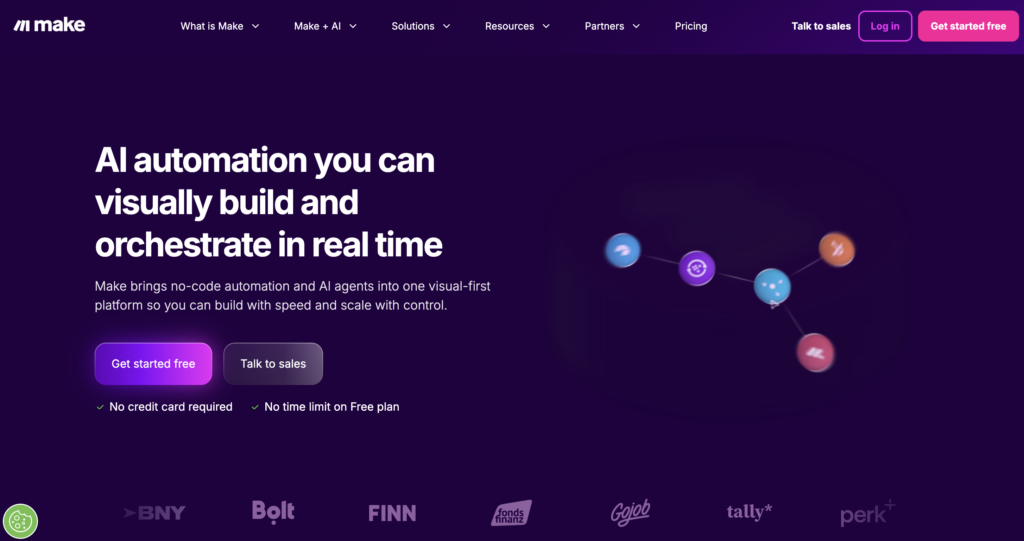
Make is the extra contender in this conversation. It gives you a visual workflow builder, stronger branching logic, and lower starting costs than Zapier in many cases, including use cases like for social media automation tools that handle social management across multiple accounts—with complex branching for multi-channel posts.
Pros: Great for technically-minded marketers that want to build more advanced content systems for nuanced use cases, with room to grow.
Cons: Setup time can be a beast on Make. You’ll need to set aside some time to get yourself familiar with how the branching workflow process fully functions before you’ll see the potential of this tool.
Pricing: Make has a free plan and their paid plans start at $9/mo and up
Make is certainly best for power users and technically-savvy operators, not for your average blogger or marketer, so be sure to set the right expectations for this tool.
How to Choose the Right Blog Automation Tool for Your Needs

The right blog automation tool for you, depends mostly on what you’re trying to solve for.
Start by asking yourself the question, “what’s the biggest bottleneck in my content creation process?“
- If writing is slow or difficult for you, choose a writing-forward AI tool.
- If publishing consistently is challenging, choose a tool with full blog automation.
- If you’re managing several sites at once, you need scale, multi-site control, and reporting.
Pretty straightforward, huh? Here’s the breakdown.
For Beginners and Budget Creators
For most beginners, I’d pick RightBlogger or SEOWriting AI. RightBlogger is easier if you want one place to plan, draft, optimize, schedule, and publish quality content at scale. SEOWriting AI is appealing if budget matters most. I’d only add Zapier if you actually need app connections across your business.
For Agencies, Teams, and Multi-Site Publishing
For agencies or content teams, I’d look first at RightBlogger, Arvow, and Outrank. RightBlogger gives the broadest all-in-one stack. Arvow fits for heavy multi-site autopilot. Outrank fits for teams chasing search visibility above all else.
Blog Automation Best Practices So Your Content Feels Human
Automation works best when it removes repetitive tasks, not when it replaces your decision-making entirely.

The fastest workflow in the world still fails if your AI-generated content sounds generic or gets facts wrong. In fact, this outcome can be even worse if you destroy your credibility online.
Automate Research, Drafting, and Publishing, but Always Review Before Publishing
AI can save you hours of time, but it can’t protect your reputation.
Before your automated blog content is published, make sure you perform human editing to check facts, examples, links, brand voice, and claims. I also recommend making sure that your articles actually answer real reader problems & match search-intent.
Most importantly, don’t try to automate everything on day one. Start with one clean path using a content calendar, from keyword to draft to edit to publish. Voice controls matter here too. If a tool can learn how you sound, you’ll spend less time rewriting bland copy.
Track What Performs, Then Improve the System Over Time
The best automation setup is never truly set-and-forget. Watch your Google Search Console analytics reports for impressions, rankings, clicks, time on page, and conversions.
Based on how your automated content is performing, tune the automation system you’re using. If you want a solid framework for that side of the process, my guide to using AI tools for SEO pairs well with any of the tools on this list.
FAQs About Blog Automation Tools (Frequently Asked Questions
Here are the most commonly asked questions I get about the use of blog automation tools & how I use them to grow my businesses.
Can blog automation tools write content that ranks on Google?
Yes, they absolutely can. I have hundreds of AI-written blog posts that do rank high in Google and other search engines for their target keywords. Still though, ranking comes from a combination of topic choice, usefulness, internal linking, clear structure, and editing, not just fast publishing of AI slop. The right blog automation tools build in your personalization and SEO & AEO best practices to combine together for maximum impact.
Will Google penalize automated blog content?
No, as per Google’s helpful content guidelines, Google cares more about content quality than whether it’s AI-generated content or how you produced the article. Thin, wrong, or lazy content is the real problem.
What’s the best blog automation tool if I want the fewest moving parts?
RightBlogger is my pick for the easiest to use and scale across multiple sites at the same time. It covers the most blogging tasks in one place, including automated publishing and the ability to schedule posts far out in advance on your calendar.
What’s the best tool if I only need workflow automation?
Zapier is the easiest place to start for tasks like a social listening to blog publishing workflow. Make is better if you need more complex flows and lower-cost scaling.
Are blog automation tools good for marketing agencies?
Yes, especially RightBlogger, Arvow, and Outrank. They make the most sense for marketing agencies that are managing multiple sites, client workflows, and/or social media accounts.
If you’ve got more questions about whether blog automation is the right move for you, hit me in the comments below 👋
Final Thoughts on Using Blog Automation Tools in 2026
The best blog automation tools don’t replace good blogging. Ultimately, they’re built to help amplify the effectiveness of a content creation process that’s already working well.
Automation tools give me more time to focus on the activities in my blogging process that matter most… like thinking clearly and guiding the writing of something that’s actually worth reading, helping to streamline the entire process.
If you want one tool to start with today, here are my picks (and what each is best for):
- RightBlogger: Best for agencies, teams, and bloggers who want one platform to handle everything from keyword research to auto-publishing across multiple CMS platforms
- Outrank: Best for affiliate site owners and niche publishers who prioritize SEO rankings and backlink building above all else
- Arvow: Best for multi-site operators who need hands-off, multilingual content publishing at scale
Hit me in the comments section below if you’ve got questions or want guidance!
Use My 50+ Powerful Free Blogging Tools Today
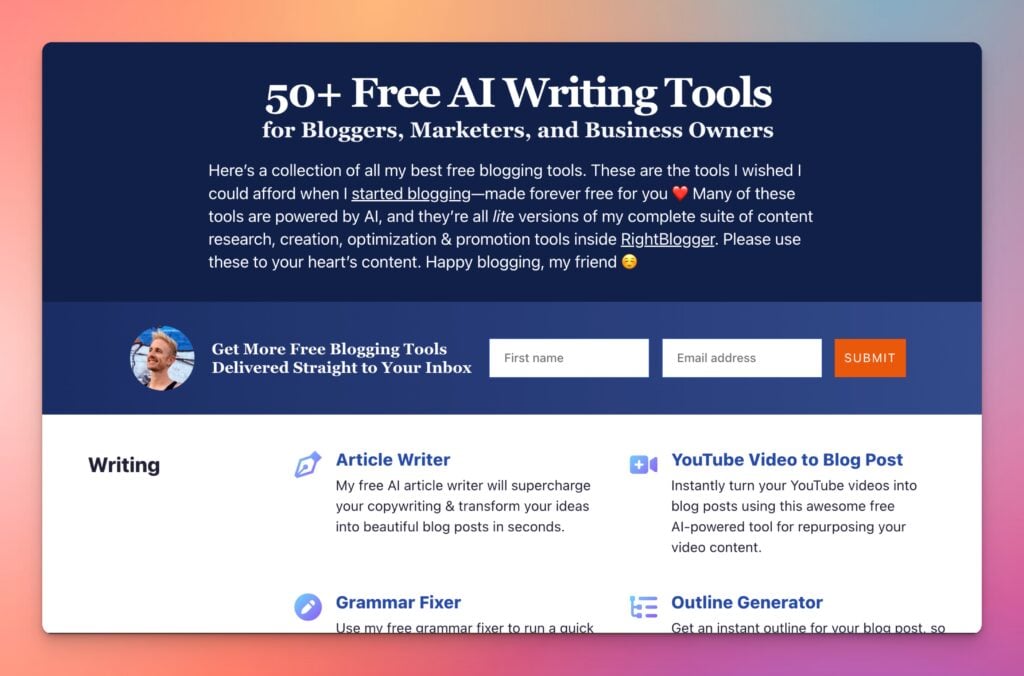
When I first started blogging, I couldn’t afford fancy tools. That sucked. And that’s why I’ve built a stable of powerful free blogging tools ranging from keyword research to an AI article writer, blog idea generator and more. Forever free for all to use—no strings attached.

The true value still lies in human discernment to prevent sites from becoming “robot content farms”, but how do you personally draw the line between efficient automation and maintaining the authentic human touch that builds real trust with your audience?
You’ve got that right! I spend a lot of time in the ‘pre-production’ process with my blog automations (i.e. making sure outlines are on target, voice/tone is personalized very well) and then on the back end I spend time editing/reviewing each of my posts before sending content live 🤘
Great breakdown of blog automation tools—this really highlights how important it is to balance automation with quality. As a service-based business like ours at ENE Electrical, we’ve found that tools like these can help streamline content creation, but the real value still comes from sharing genuine expertise and local experience.
For example, when we create content around services like electrical repairs, LED lighting, or EV charger installations, it’s not just about publishing consistently—it’s about making sure the information is accurate, helpful, and builds trust with homeowners. Automation definitely helps with efficiency, but human insight is what turns a blog into a lead-generating asset.
Appreciate the detailed comparison here—especially the focus on choosing tools based on actual workflow needs rather than just features.
Great list of automation tools! It’s helpful to see options that can actually save time without sacrificing quality. I especially appreciated the tips on how to use them strategically rather than relying on automation for everything. Thanks for the useful recommendations!
This is a really valuable breakdown of blog automation tools — it clearly shows how automation can speed up content creation while still requiring a human touch for quality.
I’ve noticed a similar approach works well in the travel industry too, where automation helps with planning and content, but personalization is what truly connects with travelers. I also share travel insights on pakistantoure.com, and this really highlights the importance of balancing automation with authenticity. Thanks for sharing!
Absolutely — blogging is still powerful in 2026, but success now depends on smart automation and quality content working together. The right tools save time on SEO, publishing, and promotion while still keeping content authentic and valuable.